THE GREENING OF SECURITIES FINANCE:
THE PATH FORWARD

To the Audit Committees of Securities Lenders:
Thomas Jefferson said that we are only stewards of the wealth of our generation, held in usufruct for the next.[1] In that spirit, we are pleased to report on the evolution of best practices for ESG compliance in the securities finance community. Sustainability must be a core morality in a market where each day tens of thousands of professionals work alongside their industry partners to reinvest the savings of more than $1.7 trillion held in trust for our dependents.
Securities finance, perhaps more than any other global industry, demands practices which are not just socially acceptable, but also contribute to a rigorous discipline for governance and environmental sustainability. For nowhere else is society more dependent on honesty and fair play than nearest the treasure chest.
Our metrics in this study will be auditable, made accessible by compiling the confidential data for securities financing transactions in a data trust under the control of trade-matched, unique transaction identifiers validated by an encrypted, blockchained journal and distributed ledger.
We welcome your questions and comments, either now or when we meet at the next industry conference.
Thank you for considering participation in our inaugural 2022 Annual ESG Report, “The Greening of Securities Finance: The Path Forward.” We welcome your questions and comments, either now or when we meet at the next industry conference.
I. PROXY METRICS: BALANCING THE VOTING – INCOME TRADEOFF
This phase of the study will update our 2010 examination of academic allegations of borrowed proxy abuse by responding to recent academic criticisms of negligent stewardship by asset managers in balancing the loan-proxy tradeoff. Using new data sources, mapping techniques, and database technologies, we will examine activity spike periods around proxy record dates for evidence of loan recall / substitution breakdowns in relation to the uninstructed voting capacities of broker-dealers in the context of their borrowing volumes. This study and confidential report is intended to be a control group for the data sources and a proof of concept for the algorithms and statistical methods we plan to employ for end-to-end mapping in Phase II.
GOVERNANCE BEST PRACTICES
Trades / Models
Trades / Models
Documents / Surveys
Documents / Surveys
Many factors are involved in recall dynamics. But if principals have enough relevant data to avoid contributing to market instabilities, they could reduce record-date potential for pricing volatility and short squeezes. For example, if the timelines and results of past recalls were better understood, e.g., ten working days lead-time, it would be easier for lenders to comply with minimum recall standards. At present, there are no specific metrics available to guide lenders on the best way to optimize their proxy recall processes. Historical, industry-wide aggregates describing recall efficiency, relative to proxy significance, specialness, and other factors, would be helpful.
Disclosure of aggregate, security-specific results by a neutral entity could also reduce the periodic confusion experienced by academics and regulators when considering the cause of spikes in lending activity around record dates.
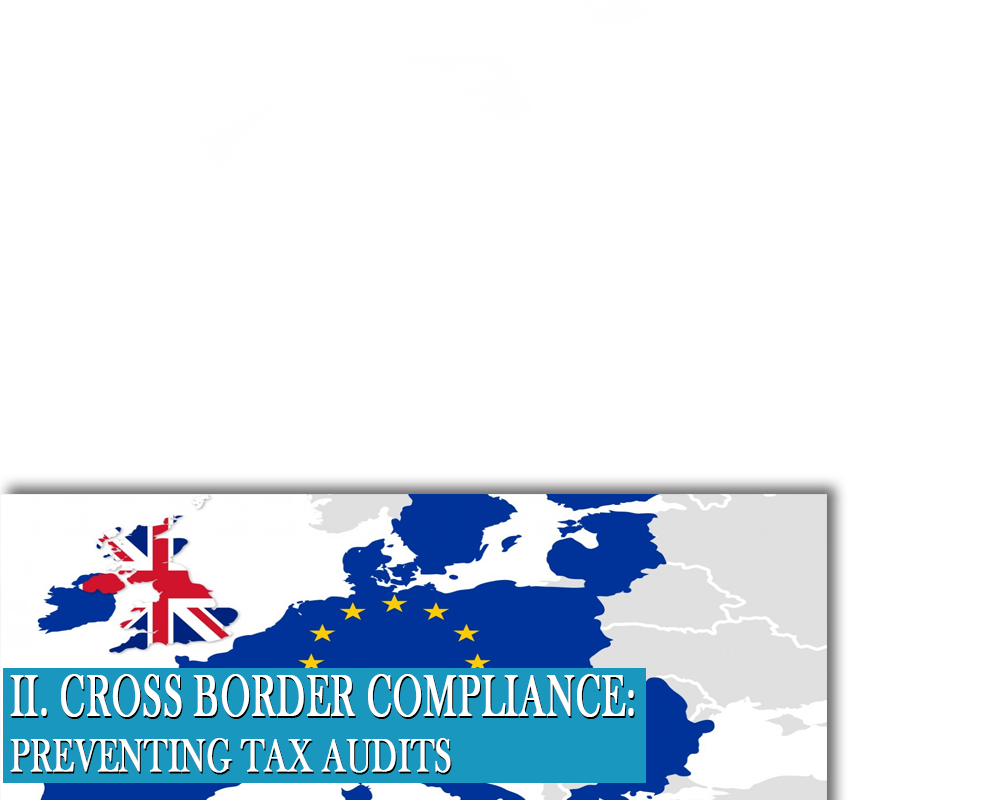
II. CROSS BORDER COMPLIANCE: PREVENTING TAX AUDITS
By pooling policy documents and risk profiles with the datasets from Phase I, this study will examine cross-border securities lending transactions over dividend record dates, by mapping inter-market transactions on an end-to-end basis to elicit each borrower’s purpose. In doing so, transactions with benign purposes, including recalls, can be separated from indeterminate or potentially abusive purposes.We anticipate that parsing transactions in this manner could be useful to regulators and taxing authorities in the European Union, for example, who have been vexed by tax withholding reclaim schemes and searching for methods to detect them.
SOCIAL BEST PRACTICES
Trades / Models
Trades / Models
Documents / Surveys
Documents / Surveys
We believe it may now be possible, despite the fungibility of securities and the fluid accounting practices of prime brokers, to track many, and perhaps most securities loans through the use of encrypted, shared ledgers. We believe that an intermarket and cross-
border cryptographically-encrypted, append-only, shared ledger may be able to solve the modern problem of withholding tax fraud in the European markets, by virtue of its ability to validate a securities loan’s economic substance or the lender’s exempt status to the satisfaction of the taxing authorities. In addition, if institutional investors voluntarily support the ledger, it could also be reported as an ESG social benefit from the securities finance community to the global capital markets. And, if successfully developed, U.S. mutual funds and other institutional investors could be largely spared the burden of intrusive audits of their cross-border loans by the IRS and EU tax authorities.
III. DATA TRUSTS AND SHARED LEDGERS:
GIVING CONTROL BACK TO THE PRINCIPLES
By pooling policy documents and risk profiles with the datasets from Phase I, this study will examine cross-border securities lending transactions over dividend record dates, by mapping inter-market transactions on an end-to-end basis to elicit each borrower’s purpose. In doing so, transactions with benign purposes, including recalls, can be separated from indeterminate or potentially abusive purposes.We anticipate that parsing transactions in this manner could be useful to regulators and taxing authorities in the European Union, for example, who have been vexed by tax withholding reclaim schemes and searching for methods to detect them.
SUSTAINABILITY AND ENVIRONMENTAL BEST PRACTICES
Trades / Models
Trades / Models
Documents / Surveys
Documents / Surveys
We believe it may now be possible, despite the fungibility of securities and the fluid accounting practices of prime brokers, to track many, and perhaps most securities loans through the use of encrypted, shared ledgers. We believe that an intermarket and cross-
border cryptographically-encrypted, append-only, shared ledger may be able to solve the modern problem of withholding tax fraud in the European markets, by virtue of its ability to validate a securities loan’s economic substance or the lender’s exempt status to the satisfaction of the taxing authorities. In addition, if institutional investors voluntarily support the ledger, it could also be reported as an ESG social benefit from the securities finance community to the global capital markets. And, if successfully developed, U.S. mutual funds and other institutional investors could be largely spared the burden of intrusive audits of their cross-border loans by the IRS and EU tax authorities.
AMICUS / REBUTTAL BIBLIOGRAPHY
Official Guidance and Standards
- United Nations, Principles for Responsible Investment, Technical Guide: ESG Incorporation in Hedge Funds, May 13, 2020
- EU, Regulation 2019/2088 of the European Parliament and of the Council on sustainability‐related disclosures in the financial services sector, November 27, 2019
- EU, Directive 2014/95/EU of the European Parliament and of the Council amending Directive 2013/34/EU as regards disclosure of non-financial and diversity information by certain large undertakings and groups, October 22, 2014
- U.S. Securities & Exchange Commission, Guidance Regarding Disclosure Related to Climate Change, February 28, 2010
- U.S. Securities & Exchange Commission, Modernization of Regulation S-K Items 101, 103, and 105, August 26, 2020
- Sustainability Standards Board, https://www.sasb.org/
- Organization for Economic Co-operation and Development (OECD), Due Diligence Guidance for Responsible Business Conduct, 2018
OFFICIAL GUIDANCE AND STANDARDS
- United Nations, Principles for Responsible Investment, Technical Guide: ESG Incorporation in Hedge Funds, May 13, 2020
- EU, Regulation 2019/2088 of the European Parliament and of the Council on sustainability‐related disclosures in the financial services sector, November 27, 2019
- EU, Directive 2014/95/EU of the European Parliament and of the Council amending Directive 2013/34/EU as regards disclosure of non-financial and diversity information by certain large undertakings and groups, October 22, 2014
- U.S. Securities & Exchange Commission, Guidance Regarding Disclosure Related to Climate Change, February 28, 2010
- U.S. Securities & Exchange Commission, Modernization of Regulation S-K Items 101, 103, and 105, August 26, 2020
- Sustainability Standards Board, https://www.sasb.org/
- Organization for Economic Co-operation and Development (OECD), Due Diligence Guidance for Responsible Business Conduct, 2018
INDUSTRY WHITEPAPERS AND STANDARDS
- RMA/PASLA, Global Framework for ESG and Securities Lending, May 2021
- ISLA, Allen & Overy, Framing Securities Lending for the Sustainability Era, March 18, 2021
- RMA, Complementary, Not Conflicting. Securities Lending and ESG Coexist, October 12, 2020
- ISLA, Beyond Mechanics: The Intersection of Securities Lending and ESG Investing, October 2, 2020
Corporate Human Rights Benchmark, https://www.corporatebenchmark.org/ - ISO 26000 Social Responsibility, https://www.iso.org/iso-26000-social-responsibility.html
- Global Reporting Initiative, https://www.globalreporting.org/
AIMA, From Niche to Mainstream: Responsible Investment and Hedge Funds, February 2018
EUROPEAN UNION
- ESMA, Final Report on Cum/Ex, Cum/Cum and Withholding Tax Reclaim Schemes, September 23, 2020
- European Parliament – FISC Sub Committee on Fiscal Matters, Public hearing on “Cum/ Ex and Cum/Cum scandal,” February 24, 2021
- ESMA Letter to the European Commission on ESG Ratings, January 29, 2021
- EU Action Plan on Sustainable Finance, 2021
RECENT PRESS
- Bloomberg, “Goldman Says ESG Finance to Become ‘Core Part’ of Strategy,” by David Caleb Mutua, February 12, 2021